High-voltage cathode materials for lithium-ion batteries have been a hot
topic of research in recent years, and the corresponding high-voltage
electrolyte has also become a focus of research. Designing and preparing new
lithium-ion batteries with better performance, higher energy and voltage is a
research hotspot in the power supply field. In recent years, high-voltage
cathode materials represented by LiNi0.5Mn1.5O4 and LiCoPO4 have developed
rapidly, while the matching electrolytes have lagged behind. Therefore, the
development of a 5V electrolyte system is a key issue that urgently needs to be
solved.
Traditional electrolyte
1. Carbonate solvents
Traditional carbonate solvents have always been regarded as the best choice
for general-purpose electrolyte solvents due to their high conductivity, good
solubility of lithium salts, and ability to form a stable solid electrolyte
interface film (SEI film) on the surface of the negative electrode. However, the
applicability of traditional carbonates in high-voltage battery systems is not
good. This is because the oxidation potential of traditional carbonate solvents
is low and it is easy to oxidize and decompose prematurely at high potentials.
In addition, the moisture content in the electrolyte of lithium-ion batteries
has always been considered a key criterion for determining battery quality.
High-voltage electrolytes have higher requirements for moisture. If the water
content in the electrolyte is slightly higher, the electrolyte's performance
will be greatly reduced. Oxidation resistance function.
2. Ionic liquid
Ionic liquids are salts that are completely composed of cations and anions,
are liquid near room temperature, and can conduct electricity. Ionic liquids
share many common advantages such as low volatility, low flammability, high
ionic conductivity and wide electrochemical window. Due to these
characteristics, ionic liquids have been extensively studied in recent years and
used as new electrolytes to improve the electrochemical and thermal stability
properties of lithium-ion batteries under high capacity and high voltage.
Studies have shown that ionic liquids of pyrrole and piperidine
bis(trifluoromethylsulfonyl)imide salts are more suitable for use as 5V
high-voltage electrolyte materials than conventional LiPF6-based electrolyte
systems.
However, ionic liquids have very obvious shortcomings:
(1) The preparation cost is high and it cannot be used on a large scale in
industry;
(2) Although ionic liquids have high ionic conductivity, their conductivity
is still low compared to liquid electrolytes;
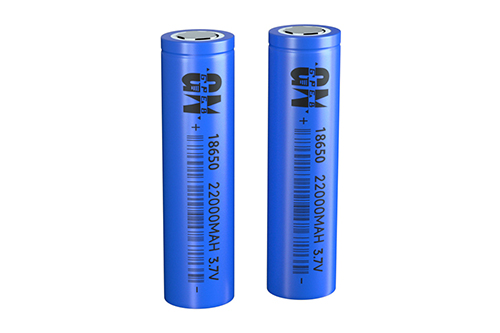
Low temperature high energy density 18650 3350mAh-40℃ 0.5C discharge
capacity ≥60%
Charging temperature: 0~45℃ Discharge temperature: -40~+55℃ Specific
energy: 240Wh/kg -40℃ Discharge capacity retention rate: 0.5C Discharge capacity
≥ 60%
Click for details
(3) Ionic liquids generally have high viscosity, which is not conducive to
high-rate charging and discharging of lithium batteries.
New liquid electrolyte
The development of new electrolyte systems is the most concerned direction
in the study of lithium-ion high-voltage electrolytes, which mainly include:
fluorinated solvents, nitrile compounds, sulfone compounds and other new solvent
compounds.
1. Fluorinated solvent
Because fluorine atoms have strong electronegativity and weak polarity,
fluorinated solvents have high electrochemical stability. The researchers
studied a series of fluorinated organic carbonate solvents and found that after
introducing fluorine element into the carbonate solvent, the antioxidant
function of the fluorine-containing carbonate will be significantly improved.
The oxidation potentials of fluorinated ethylene carbonate,
methyl-2,2,2-trifluoroethyl carbonate and ethyl-2,2,2-trifluoroethyl carbonate
are much higher than those of unfluorinated ethylene carbonate. (EC), ethyl
methyl carbonate (EMC) and ethyl carbonate (DEC). However, as the number of
hydrogen atoms replaced by fluorine atoms increases, the solubility of LiPF6 in
the solvent will be greatly reduced.
2. Nitrile solvents
In the process of studying electric double layer capacitors, researchers
first discovered that glutaronitrile and adiponitrile have an antioxidant
potential as high as 8.3V, and their electrochemical windows are wider than all
aprotic solvents. However, nitrile solvents have poor compatibility with
graphite negative electrodes. As cycles increase, the internal resistance of the
battery also increases, greatly reducing the cycle performance of the battery.
The use of EC and lithium bisoxalate difluoroborate (LiBOB) can form a stable
SEI film on the surface of the graphite negative electrode. Adding EC and LiBOB
as additives to the electrolyte can effectively improve the poor compatibility
between nitrile solvents and graphite negative electrodes. One question.
3. Sulfone solvents
Sulfone solvents are a solvent that researchers are currently focusing on
to replace traditional carbonates. Sulfone solvents are widely used as
electrolytes in different fields, such as lithium-ion batteries, lithium-sulfur
batteries and lithium-air batteries. The oxidation resistance potential of
methyl ethyl sulfone (EMS) and methoxyethyl methyl sulfone exceeds 5.8V, and
they have good compatibility with Mn-based positive electrodes. However, their
compatibility with graphite negative electrodes is very poor, so they cannot
Used in batteries with graphite as the negative electrode.
4. Other high voltage systems
LiBOB and lithium oxalate difluoroborate (LiODFB) are electrolyte lithium
salts that can form a stable SEI film on the surface near graphite in a pure
propylene carbonate (PC) solvent system. They are common negative electrode
surface components like VC. Membrane additives. The study found that compared
with TMS and LiPF6, TMS has very good compatibility with LiBOB and LiODFB. The
electrolyte composed of TMS, LiBOB, and LiODFB can not only form a stable SEI
film, but also effectively reduce the internal resistance of the battery. In
recent years, LiBOB's ability to protect high-voltage cathode materials on the
surface of the cathode has attracted more and more attention. For example,
adding LiBOB to the electrolyte that matches traditional high-voltage cathode
materials can enhance the cycle performance of the battery. . By studying the
phenomenon of SEI film formed by LiBOB on the surface of the cathode, it was
found that adding LiBOB can effectively protect the oxidative decomposition of
the electrolyte. At the same time, through theoretical calculations, the
oxidation and decomposition mechanism of LiBOB on the electrode surface was
studied: LiBOB ring opening causes pairwise polymerization to form a protective
film, and the B atoms exposed due to ring opening on the outside can attract
PF-6 and F- to combine with it. , and then achieve the purpose of preventing the
electrolyte from decomposing.
In general, high-voltage electrolytes for lithium-ion batteries have
attracted the attention of many researchers and have become the most important
research direction for lithium-ion battery electrolytes. Different high-voltage
electrolyte systems have their own advantages and disadvantages. Due to the high
cost of development and use of new solvent systems, there is currently no new
solvent that can completely replace carbonate-based solvents; if the production
and use costs can be significantly reduced and the compatibility with negative
electrode materials can be improved, new solvent system electrolytes will have
It is hoped that it can completely replace carbonate-based solvents. Therefore,
more detailed research is needed. As the research continues to deepen, the new
solvent system electrolyte will definitely have wider application prospects.
Read recommendations:
Alkaline AA Battery LR06
How long can lithium batteries last?
Introduction to lithium battery
NiMH No.13 batteries direct sales
1.5V rechargeable battery




















 360° FACTORY VR TOUR
 Whatsapp
 Tel
Tel Email
Email TOP
TOP