Recently, in order to further strengthen the management of the lithium-ion
battery industry and promote the accelerated transformation and upgrading of the
industry, the Ministry of Industry and Information Technology has issued
regulations on the "Lithium-ion Battery Industry Standard Conditions"
(hereinafter referred to as the "Specifications") and the "Interim Measures for
the Management of Lithium-ion Battery Industry Standard Announcements"
(hereinafter referred to as the " Interim Measures") were revised to form the
"Lithium-ion Battery Industry Standard Conditions (2018 Edition)" (hereinafter
referred to as the "2018 Standard") and the "Interim Measures for the Management
of Lithium-ion Battery Industry Standard Announcements (2018 Edition)" (
(hereinafter referred to as the "2018 Interim Management Measures"), the new
version of the policy will be officially implemented on February 15, 2019.
The reporter compared the old and new versions of the document and sorted
out several differences:
First, it no longer emphasizes scale and requires upgrading technology.
According to the "Specifications", enterprises should meet a number of scale
requirements: the annual battery production capacity is not less than 100
million watt hours; the annual production capacity of cathode materials is not
less than 2,000 tons; the annual production capacity of anode materials is not
less than 2,000 tons; the annual separator production capacity is not less than
20 million square meters; the annual electrolyte production capacity is not less
than 2,000 tons, and the electrolyte production capacity is not less than 500
tons.
The "2018 Specification" cancels the relevant requirements for production
scale, but puts forward requirements for technological innovation and technical
indicators, which mainly include two points: First, the positive and negative
electrode materials of the battery should have harmful metal impurities such as
iron, zinc, and copper. Detection capabilities and detection accuracy have been
increased from no less than 1 ppm to no less than 10 ppb, and the requirements
have been increased by 100 times; secondly, it is stipulated that R&D
expenses should not be less than 3% of the company's main business income in
that year.
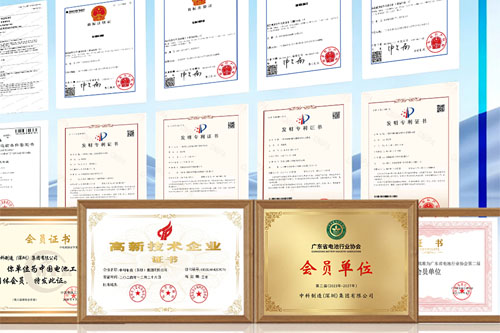
It is worth noting that the "2018 Standards" no longer require enterprises
to have high-tech enterprise qualifications or independent R&D institutions
and technology centers at or above the provincial level. Instead, they are
encouraged to obtain high-tech enterprise qualifications or R&D institutions
and technology centers at or above the provincial level. .
In comparison, the "2018 Standards" added relevant provisions on
intelligent manufacturing and green manufacturing. In terms of smart
manufacturing, companies are encouraged to actively carry out smart
manufacturing, reduce operating costs, shorten product production cycles,
improve production efficiency, reduce product defective rates, and improve
energy utilization; in terms of green manufacturing, companies are specifically
encouraged to build green supply chains. , establish a procurement, production,
marketing, recycling and logistics system oriented towards resource conservation
and environmental friendliness, promote stakeholders in the supply chain to
comply with industry standards and norms, implement the extended producer
responsibility system, and establish recycling and treatment of waste
lithium-ion batteries system.
The "Interim Measures" stipulate that if the rectification fails or a major
quality accident occurs or the production is suspended for more than one year,
the Ministry of Industry and Information Technology will revoke its announcement
qualification. Enterprises whose announcement qualifications have been revoked
can re-apply for announcement one year after passing the rectification. The
"2018 Interim Measures" stipulates that re-application materials from companies
whose announcement has been revoked will not be accepted within two years.
In addition, the "Interim Measures" stipulate that the Ministry of Industry
and Information Technology organizes or entrusts a third-party testing agency to
conduct spot checks on the products of announced companies. Enterprises that
fail to pass the random inspections will be notified and ordered to make
rectifications; enterprises that fail to meet the standards for two consecutive
spot inspections within a year will be deemed to be unable to maintain the
requirements of the "Standard Conditions". The "2018 Interim Measures" cancel
the "within one year" time limit.
According to the "2018 Interim Measures", the Ministry of Industry and
Information Technology is responsible for the management of national lithium-ion
battery industry specification announcements, organizes the review, random
inspection, publicity and announcement of enterprise application materials,
releases the list of lithium-ion battery industry specification announcements
and implements dynamic management. When an enterprise declares, its actual
production in the previous year should not be less than 50% of its actual
production capacity. At the same time, it is also required that enterprises
strictly control new lithium-ion battery (including supporting) projects that
simply expand production capacity and have low technical levels. For new
construction, renovation and expansion projects that are truly necessary to
promote technological innovation, improve product quality, reduce production
costs, etc., the competent industry departments shall organize demonstrations in
accordance with relevant regulations, and they can be implemented if the
demonstrations pass.
Industry insiders said that the implementation of the New Deal has
simplified the production capacity and process technology parameter requirements
for the four major lithium-ion battery material companies, and further returned
technological dominance to the companies. At the same time, some backward
production capacities that do not meet the technical standards will gradually be
eliminated by the market. . The improvement of quality inspection standards for
upstream material manufacturers of lithium-ion batteries will undoubtedly be of
great significance to the improvement of the quality of related lithium battery
raw materials, including new energy vehicle power batteries.
Read recommendations:
601435 270mAh 3.7V
Key crafts for battery assembly.lithium battery pack 48v 120ah
2200mah 18650 battery.University and Toyota Research Institute develop AI algorithm to predict batte
NiMH battery pack Manufacturing
r6 battery














 360° FACTORY VR TOUR
 Whatsapp
 Tel
Tel Email
Email TOP
TOP