In just two months, five spontaneous combustion incidents of electric
models of different brands occurred in China. When the relevant national
departments issued notices asking car companies to investigate the safety
hazards of electric models, we not only had some questions in our minds: Is
battery technology that has been used for nearly 200 years really mature?
Unfortunately, this is not a definite answer: compared with the first
generation of zinc-copper batteries born in the 17th century, the current
battery technology has matured too much; however, if we look at large-scale
industrial application and stability, Look, current battery technology still has
many shortcomings.
Judging from the current electric vehicles that are extremely dependent on
battery technology, the batteries on electric vehicles are classified into
chemical batteries, and the power batteries used as energy storage devices are
mainly lithium batteries.
Although there are 6 different types of lithium batteries based on
different cathode materials, they are lithium titanate, lithium cobalt oxide,
lithium manganate, lithium iron phosphate, and ternary materials (nickel cobalt
aluminum and nickel cobalt manganese). However, in terms of energy density and
safety, lithium iron phosphate and ternary materials are the best. Therefore,
almost all power batteries of electric vehicles use these two batteries.
However, as far as energy storage devices are concerned, these two batteries
have not yet been developed. to perfection.
Low temperature lithium iron phosphate battery 3.2V 20A -20℃ charging, -40℃
3C discharge capacity ≥70%
Lithium iron phosphate batteries are stable, but the energy density is too
low
The positive electrode material of lithium iron phosphate batteries is
lithium iron phosphate, while the negative electrode material is mostly iron. In
this way, lithium iron phosphate batteries inherently have two major advantages.
First, they are low cost and suitable for large-scale use; second, they do not
contain heavy metals. , causing less environmental pollution. In addition,
because the working voltage of lithium iron phosphate batteries is only 3.2V,
and the P-O bond of lithium iron phosphate is relatively stable, there will be
no leakage when stored at zero voltage. At the same time, it is very safe under
high temperature conditions or when overcharged.
However, under low temperature conditions, the attenuation of lithium iron
phosphate batteries is more serious, and the battery capacity often drops to 20%
or even lower of the original capacity, which places great geographical
restrictions on its use as a power battery for electric vehicles. In addition,
due to material characteristics, lithium iron phosphate batteries are larger in
size, resulting in a much lower energy density than ternary lithium
batteries.
In other words, although lithium iron phosphate batteries have the
advantages of fast charging, high cycle life (5,000 cycles of charging under
experimental conditions, the remaining capacity can maintain more than 80%), and
high safety, they have low energy density and poor low-temperature performance.
These two major shortcomings have become the biggest obstacles to its current
large-scale commercial use.
Ternary lithium battery has high energy density, but poor thermal
stability
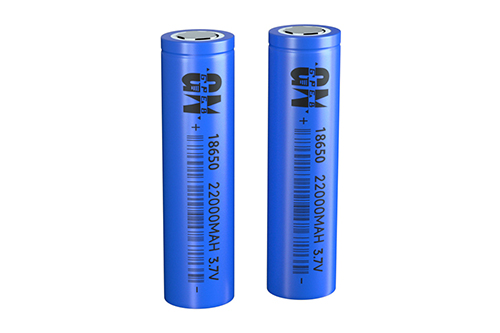
Low temperature high energy density 18650 3350mAh-40℃ 0.5C discharge
capacity ≥60%
As the current main force of electric vehicle power batteries, ternary
lithium batteries naturally have many advantages. First of all, in terms of
applicability, ternary lithium batteries are small in size and can easily
achieve high energy density, providing models with It has a long cruising range;
the working voltage is generally 3.6-3.8V, and the output power is large, which
can easily meet the power needs of various models. What’s more, it can maintain
a relatively normal capacity in a low-temperature environment (-30°C), laying a
solid foundation for large-scale use.
But in terms of stability, ternary lithium batteries have obvious
shortcomings. Under high temperature conditions, the ternary materials in
ternary lithium batteries will decompose at 200°C, releasing oxygen atoms, which
poses a great fire hazard. Several models that have caught fire recently all use
ternary materials without exception. lithium battery. In addition, in terms of
durability, the ternary lithium battery is far less than the 5,000 times of the
lithium iron phosphate battery. After 2,000 replays, the capacity will be
reduced to about 70%. Due to the expensive materials, subsequent battery
replacement costs will also be one Not a small expense.
The advantages and disadvantages of ternary lithium batteries are very
clear. When making choices, electric vehicle manufacturers have chosen its high
battery life and high applicability. However, they have also spent a lot of
money on developing thermal control systems to improve safety.
Although each has its shortcomings, they are all making progress
together.
Although both types of batteries still have obvious shortcomings, the wave
of vehicle electrification has begun to show irreversible momentum. The research
and development efforts of the two batteries have also increased a lot, and some
improvements have begun to be made in the shortcomings. .
Some lithium iron phosphate battery manufacturers have made improvements to
the positive electrode, negative electrode, electrolyte and binder, allowing
them to produce lithium iron phosphate batteries with a discharge efficiency of
94% at -20°C. This is This is a big improvement; in terms of energy density,
some manufacturers have now made lithium iron phosphate batteries with an energy
density of 190Wh/kg through material optimization and other means, although they
are still quite different compared to Tesla's ternary lithium batteries. There
is a gap, but it is not much different from mainstream lithium batteries.
In terms of ternary lithium batteries, the main problem is thermal
stability. At present, various electric vehicle manufacturers are also actively
solving the problem. Various temperature control systems such as liquid cooling
and air cooling are also being introduced in more models. middle. Technically,
battery manufacturers are also improving the thermal stability and durability of
ternary lithium batteries by optimizing the nickel content in ternary
materials.
Summary: At present, although battery technology is still imperfect, its
progress is very rapid due to the push of vehicle electrification. In addition
to these two types of batteries, the development speed of solid-state batteries
and hydrogen fuel cells is also very gratifying. With the support of these
technologies, the day when electric vehicles truly mature does not seem too far
away from us.
Read recommendations:
LR6
Characteristics of lithium batteries.Nickel Hydride No. 5 batteries
Super battery prospect.18650 lithium ion battery cell
803040 battery manufacture
18650 battery pack wholesale




















 360° FACTORY VR TOUR
 Whatsapp
 Tel
Tel Email
Email TOP
TOP