18650 rechargeable battery lithium 3.7v 3500mah
CH
About Us
Company Profile Development History Sales Network Partner Social Responsibility
Products
Rechargeable Battery Battery Packs Energy Storage Battery Primary Battery Handicraft Article
Subsidiary Company
SINO TECHNOLOGY SUNBEAM GREEN POWER DATAPOWER SEONG-HEE STD
Honor
Qualification Certificate Patent Certificate Honor Certificate
R&D
R&D Center Test Center
News
Company News Industry News
Contact Us
Other information
product
polymer lithium battery Primary battery Rechargeable Battery LR03 alkaline battery
18650 rechargeable battery lithium 3.7v 3500mah

Other information

Home  >  Other information

Lithium-Battery Automated Testing Equipment Applications

release time:2025-09-27 Hits:     Popular:AG11 battery


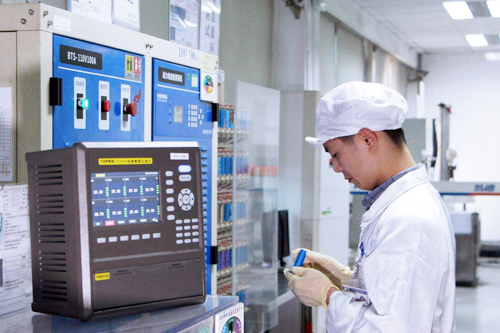
Lithium-battery automated testing equipment (ABTE) refers to a suite of advanced, computer-controlled systems designed to verify the quality, safety, and performance of lithium-ion batteries (LIBs) across their production lifecyclefrom raw material inspection to cell manufacturing, module assembly, and end-product validation. Unlike manual testing (which is slow, error-prone, and limited in data accuracy), ABTE enables high-throughput, repeatable, and precise testing, critical for meeting the strict standards of industries such as automotive (electric vehicles, EVs), consumer electronics (smartphones, laptops), and energy storage (grid-scale systems). These systems not only ensure compliance with global regulations (e.g., IEC 62133, UN38.3) but also help manufacturers identify defects early, reduce waste, and optimize battery performance.  

The core applications of ABTE span three key stages of the lithium-battery value chain. In cell manufacturing, ABTE conducts electrode inspectionusing high-resolution cameras and laser profilometers to check electrode thickness (tolerance ±1μm), coating uniformity, and absence of defects (e.g., pinholes, scratches). For example, a lithium-battery cell factory uses an automated electrode roll-to-roll tester that scans 100% of the electrode surface at 10 meters per minute, rejecting rolls with coating variations >5% to prevent capacity loss in finished cells. Next, cell formation and grading systems charge and discharge cells cyclically (5-10 cycles) to activate the electrode-electrolyte interface (SEI layer) and classify cells by capacity, internal resistance (IR), and voltage consistency. An EV battery manufacturer, for instance, uses a 200-channel automated formation system to process 5,000 cells daily, grouping cells with IR variations <5mΩ into modules to ensure uniform performance and extend battery pack lifespan.  

In module and pack testing, ABTE focuses on electrical performance and safety validation. Electrical tests include measuring module capacity (at 0.5C and 1C discharge rates), voltage balance between cells (max deviation <50mV), and DC internal resistance (DCR) under loadcritical for EV packs, where imbalanced cells can cause overheating or reduced range. Safety tests, mandated by standards like UL 1642, use automated equipment to simulate extreme conditions: overcharge testing (charging at 2C until voltage reaches 5V) to check for thermal runaway; short-circuit testing (applying a 50mΩ load) to verify the batterys ability to withstand sudden current surges; and temperature cycling (-40°C to 85°C, 100 cycles) to assess performance in harsh environments. A grid-scale energy storage project, for example, relies on ABTE to test 100kWh battery packs for 5,000 charge-discharge cycles, ensuring they maintain >80% capacity retention over 10 years.  

ABTE also plays a vital role in end-of-life (EOL) testing and recycling. For used EV batteries, automated systems conduct state-of-health (SOH) and state-of-charge (SOC) testing to determine if cells can be reused (second-life applications like stationary storage) or need recycling. These systems use impedance spectroscopy to measure SOH with ±2% accuracy, avoiding manual disassembly and reducing testing time from hours to minutes. Additionally, automated sorting equipment separates cells by chemistry (LiCoO, LiFePO) and capacity, streamlining the recycling process by ensuring consistent material input for cathode recovery.  

Advanced ABTE features include data integration with manufacturing execution systems (MES) and cloud platforms, enabling real-time monitoring of test results and predictive maintenance of equipment. For example, a smartphone battery manufacturer uses AI-powered ABTE that analyzes 10,000+ test data points per cell to predict potential defects (e.g., electrolyte leakage) with 95% accuracy, reducing scrap rates by 30%. By combining high throughput, precision, and data-driven insights, lithium-battery automated testing equipment is indispensable for scaling LIB production, ensuring safety, and driving innovation in clean energy technologies.  


Read recommendations:

Lithium Battery GN72100

18650 lithium battery blast cause.CR2320 battery

Working Principle of Liquid Lithium - Ion Batteries

602030 lipo battery company

18650 battery pack price

Last article:Introduction to Lithium-Battery Performance Testing Instruments

Next article:Structural Design Schemes for Lithium Battery Packs

Popular recommendation

18650 lithium-ion battery

2023-03-22

AA Ni-MH batteries

2023-03-22

14500 battery Processing

2023-03-22

18650 li ion rechargeable battery Vendor

2023-03-22

801752 lipo battery

2023-03-22

18650 1000mAh 3.7V

2022-06-20

18650 2000mAh 3.7V

2022-06-20

Bluetooth headset

2022-09-22

Lithium-ion battery GN-300

2022-09-27

18650 2600mAh 3.7V

2022-06-20

R03P

2023-03-27

Coin Battery LR 927

2022-10-15

3.2V 230Ah

2022-10-12

Rack-mounted energy storage battery GN-192V 100Ah

2022-09-27

18650 2400mAh 3.7V

2022-08-19

1.5v Dry Battery

2023-06-25

CR2032 battery

2023-06-25

NiMH No. 7

2023-08-04

button battery 2025

2023-06-25

3.7v 18650 lithium battery

2023-06-25

What is the difference between a battery and a lithium battery

2022-11-09

Polymer18650 rechargeable battery lithium 3.7v 3500mah. lithium batteries bring more possibilities f

2023-10-14

Precautions for button type battery

2022-06-18

What are the characteristics of ternary lithium batteries?CR1632 battery

2023-06-20

What is the difference between lithium battery protection board and BMS (battery management system)?

2023-05-08

High -power power cell.energy storage system battery Manufacturing

2023-05-12

18650 lithium battery cells.What should we pay attention to in the winding process of 18650 lithium

2023-10-13

lithium 18650 li ion battery.Precautions for sealing technology of 18650 lithium-ion battery

2023-10-13

Why does the 18650 lithium battery pack bring a protective board.48v solar power energy storage powe

2023-03-28

Introduction to the carbon and aluminum foil in the battery.3.2 volt 100ah lifepo4 battery

2023-03-28
360° FACTORY VR TOUR
lithium ion battery 18650 priceWhatsapp
lithium ion battery 18650 price

lithium ion battery 18650 priceTel
+86 19925278095

lithium ion battery 18650 priceEmail
admin@sino-techgroup.com

TOP