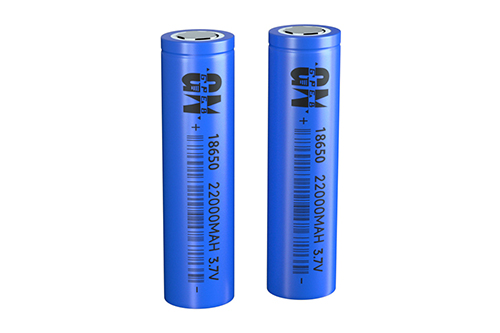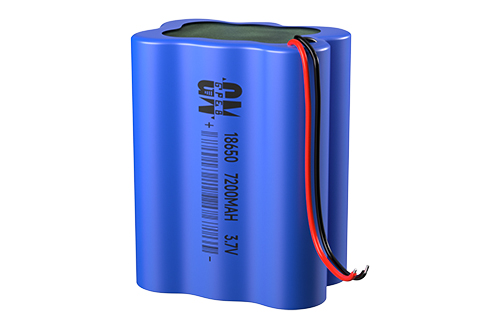
18650 rechargeable battery lithium 3.7v 3500mah
CH
About Us
Company Profile Development History Sales Network Partner Social Responsibility
Products
Rechargeable Battery Battery Packs Energy Storage Battery Primary Battery Handicraft Article
Subsidiary Company
SINO TECHNOLOGY SUNBEAM GREEN POWER DATAPOWER SEONG-HEE STD
Honor
Qualification Certificate Patent Certificate Honor Certificate
R&D
R&D Center Test Center
News
Company News Industry News
Contact Us
Other information
product
polymer lithium battery Primary battery Rechargeable Battery LR03 alkaline battery
18650 rechargeable battery lithium 3.7v 3500mah

Other information

Home  >  Other information

Research on Lithium - Ion Battery Thermal Runaway Monitoring Technologies

release time:2025-09-22 Hits:     Popular:AG11 battery


Lithium - ion battery thermal runaway is a serious safety hazard that can lead to fires and explosions, posing significant risks to both human safety and property. Therefore, the research on lithium - ion battery thermal runaway monitoring technologies has become a critical area of focus in the battery industry. These technologies aim to detect the early signs of thermal runaway, enabling timely interventions to prevent catastrophic failures.

One of the main approaches to thermal runaway monitoring is the use of temperature sensors. Traditional thermocouples and resistance temperature detectors (RTDs) are commonly employed to measure the surface temperature of battery cells or battery packs. By continuously monitoring the temperature, sudden temperature increases can be detected, which may indicate the onset of thermal runaway. However, surface - temperature - based monitoring has limitations, as thermal runaway often initiates internally within the battery cell. To overcome this, researchers are developing advanced temperature - sensing techniques, such as fiber - optic temperature sensors. These sensors can be inserted into the battery cells, allowing for direct measurement of the internal temperature and providing more accurate and early - warning signals.

Gas - sensing technology is another important aspect of thermal runaway monitoring. During thermal runaway, various combustible and toxic gases are released, such as carbon monoxide, hydrogen, and hydrocarbons. Gas sensors, including electrochemical gas sensors and metal - oxide - semiconductor (MOS) gas sensors, can be used to detect the presence and concentration of these gases. By monitoring the gas composition and concentration in the battery environment, the occurrence of thermal runaway can be identified at an early stage. Moreover, the type and concentration of the released gases can provide valuable information about the severity and progress of the thermal runaway event, helping to determine the appropriate response measures.

Electrochemical monitoring techniques are also being explored for thermal runaway detection. Changes in the electrical characteristics of the battery, such as internal resistance, voltage fluctuations, and impedance variations, can be indicative of thermal runaway. Electrochemical impedance spectroscopy (EIS) can be used to analyze the impedance changes of the battery over time. By comparing the measured impedance data with the normal operating characteristics, deviations can be detected, which may signal the onset of thermal runaway. Additionally, real - time monitoring of the battery's voltage and current profiles can reveal abnormal patterns that are associated with thermal runaway, such as sudden voltage drops or current surges.

In recent years, the integration of multiple monitoring technologies, known as multi - parameter monitoring, has gained increasing attention. By combining temperature sensing, gas sensing, and electrochemical monitoring, a more comprehensive and accurate picture of the battery's state can be obtained. Advanced data - processing algorithms and artificial intelligence techniques are also being applied to analyze the large amounts of data collected from these sensors, enabling early and reliable detection of thermal runaway. The continuous research and development of lithium - ion battery thermal runaway monitoring technologies are crucial for enhancing the safety of lithium - ion batteries and promoting their wider adoption in various applications, from electric vehicles to energy storage systems.


Read recommendations:

Cabinet type energy storage battery 10KWH

How to avoid phone battery explosion?

Future Development of Aluminum-Ion Batteries

18650 lithium ion battery cell

lithium ion battery cells 18650

Last article:High - Temperature Safety Protection Measures for Lithium Batteries

Next article:Specification of Lithium - Ion Battery Assembly Process Flow

Popular recommendation

551235 lipo battery

2023-03-22

402427 polymer battery company

2023-03-22

battery for solar energy storage manufacturer

2023-05-10

802540 battery wholesaler

2023-03-22

902030 lipo battery company

2023-03-22

Ni-MH AA1800mAh 1.2V

2022-07-01

602248 600mAh 3.7V

2022-08-19

18650 1800mAh 3.7V

2022-06-20

601525 170mAh 3.7V

2022-08-19

Ni-MH AA1200mAh 1.2Va

2022-07-01

Ni-MH AAA600mAh 1.2V

2022-07-01

LR03

2022-07-23

Li-ion 18650 3500mAh 3.7V

2022-06-20

701221 120mAh 3.7V

2022-08-19

Electric vehicle lithium battery GN-24100-FAP

2022-09-27

AG12 battery

2023-06-25

102450 polymer battery

2023-06-25

CR2330 battery

2023-06-25

602030 polymer battery

2023-06-25

AAA Ni-MH batteries

2023-06-25

Lithium - Ion Battery High - Voltage Technology and Its Industrial Development Status

2025-07-25

Custom - shaped Battery Customization Services

2025-03-14

High Temperature Resistance of Lithium-Ion Batteries

2024-12-12

Methods for Testing Lithium Battery Discharge Performance

2025-09-29

Super battery prospect.18650 lithium ion battery cell

2023-07-14

The difference between 18650 lithium battery and 32650 lithium battery.18650 battery 1800 mah

2023-10-13

-20 C Lithium battery with low temperature charging.cabinet type energy storage battery Factory

2023-05-11

Why does lithium iron phosphate battery experience bulging?6LR61 battery

2023-08-25

How much battery power is left in the lithium-ion battery for mobile phone energy storage? Is the ch

2023-08-26

Why do some batteries add a protective board, some do not need?home solar energy storage lithium bat

2023-05-08
360° FACTORY VR TOUR
lithium ion battery 18650 priceWhatsapp
lithium ion battery 18650 price

lithium ion battery 18650 priceTel
+86 19925278095

lithium ion battery 18650 priceEmail
admin@sino-techgroup.com

TOP